

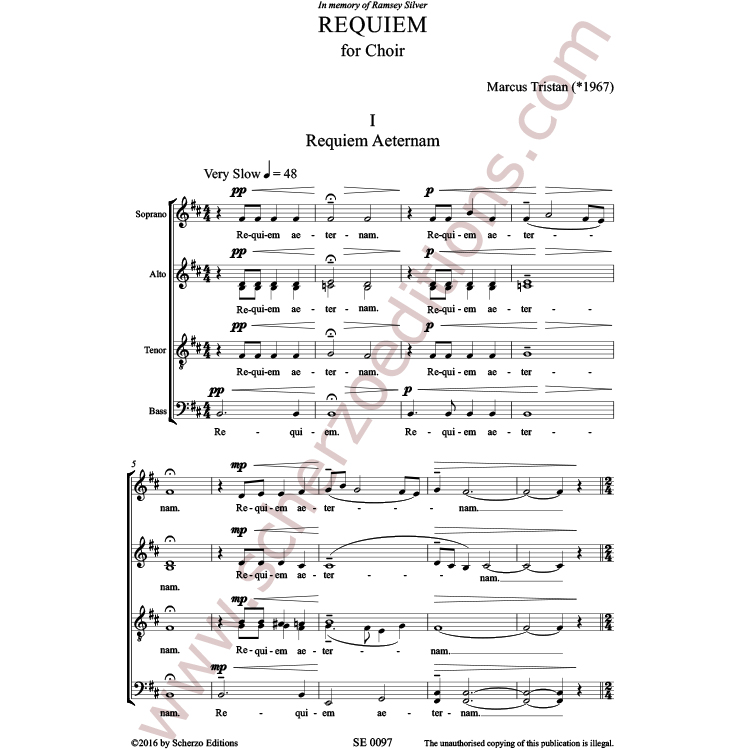
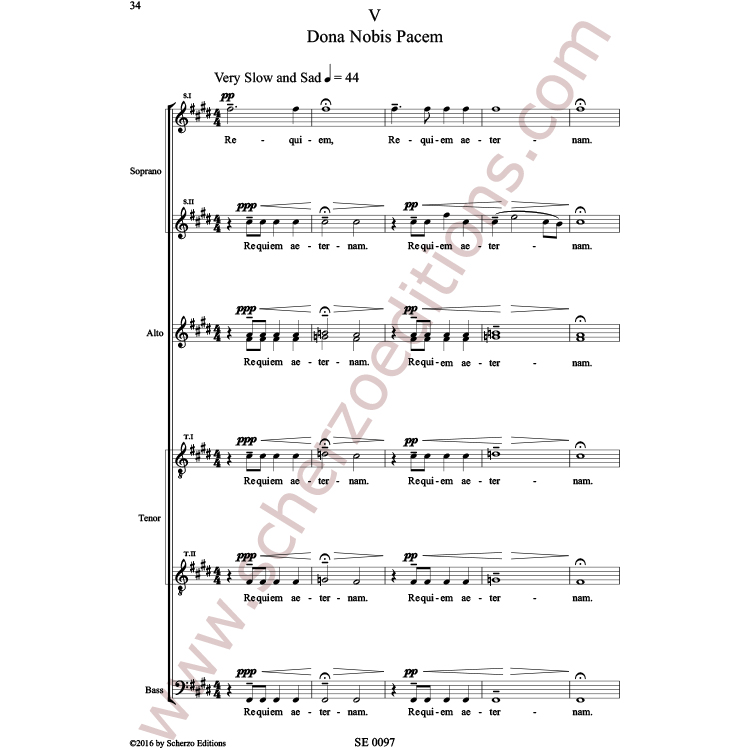
This work was originally written at the request of my then publisher Ramsay Silver of Banks Music Publications, who, sadly, died a couple of years afterwards- He asked for a choral work using Russian folk melodies, and, as my grandfather had just died, I decided to write a Requiem that weaved Russian folk tunes around various crucial phrases from the Miss pro Defunctis. But the theme here is not only death, but that of love and death intertwined – for it is love that makes life so worth living and death so ultimately unbearable for us. And there are, of course, many folk songs in all folk traditions, including the Russian one, on this subject.
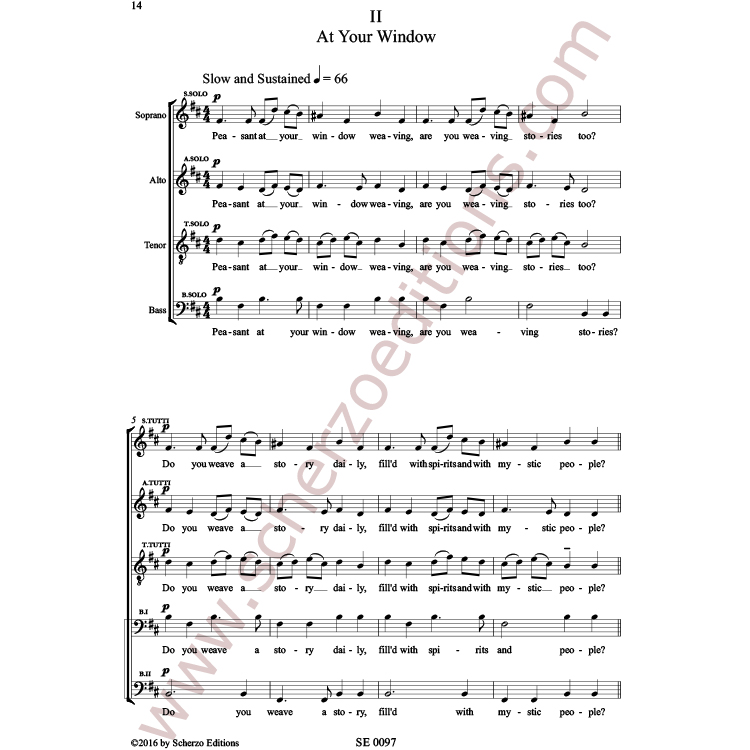
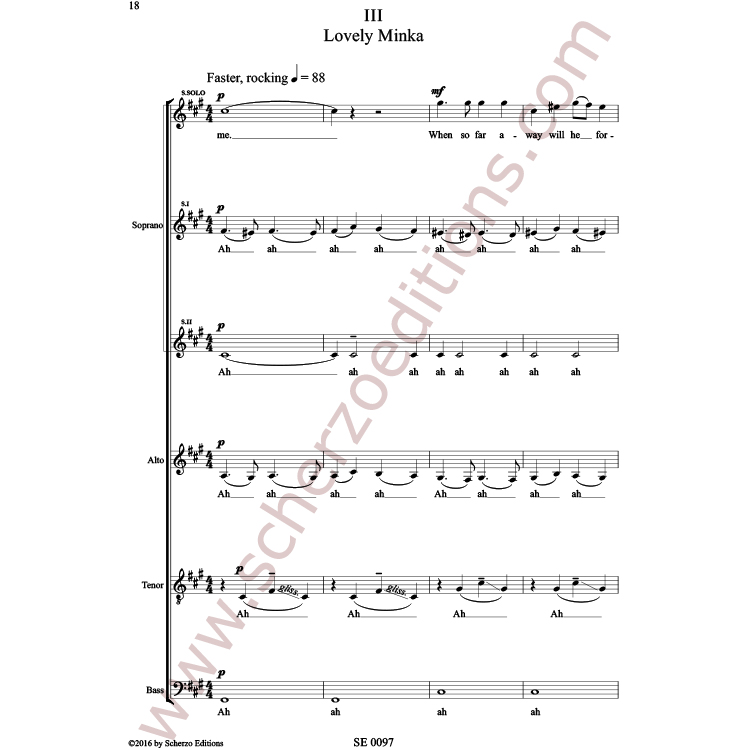
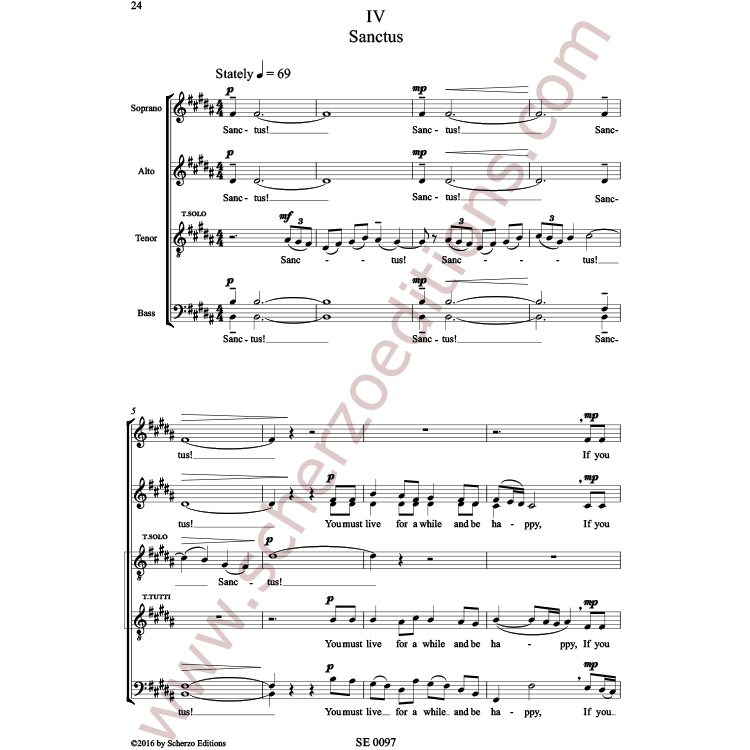
The first movement opens with some very dark and sonorous B minor chords, as if a distant echo of the Sanctus from Bach’s B minor Mass. This music, which develops each time it returns throughout the movement, is alternated with a very sad Russian love song which starts with the words “Ah, you night of my heart”. The movement ends with the requiem aeternam music fading off into the distance. The second movement is a simple setting of a Russian song which starts with the words “Peasant at you window weaving stories” and is a conversation between the choir and the young peasant woman. The second movement segues into the third movement, without a break and this is a short love duet, sung over very rich choral textures, between the young peasant woman and her lover. The fourth movement is the Sanctus, and the thrice repeated Sanctus music appears several times, and there are two Russian songs that appear in this movement. The first is a sad song called “You live for a while and be happy” and the second, although seemingly lively to start with, quickly brings up some very dark musings. The movement ends with the Sanctus music, but more sombrely than previously. The final movement, Dona Nobis Pacem, juxtaposes a desolate song called “Farewell happiness, light of my life” with a drone-like Dona Nobis Pacem. This builds slowly, through a chorale-like passage to the last section, which is a sort of carillon of bells but far from triumphal ones. More a case of where there is life there is hope than any kind of empty dream of victory over death. Marcus Tristan, 2008
Voices: Soprano (I/II), Alto (I/II/III), Tenor (I/II), Bass (I/II)
INCLUDES 1 SCORE AND 16 SEPARATE SCORES.

Reviews
There are no reviews yet.