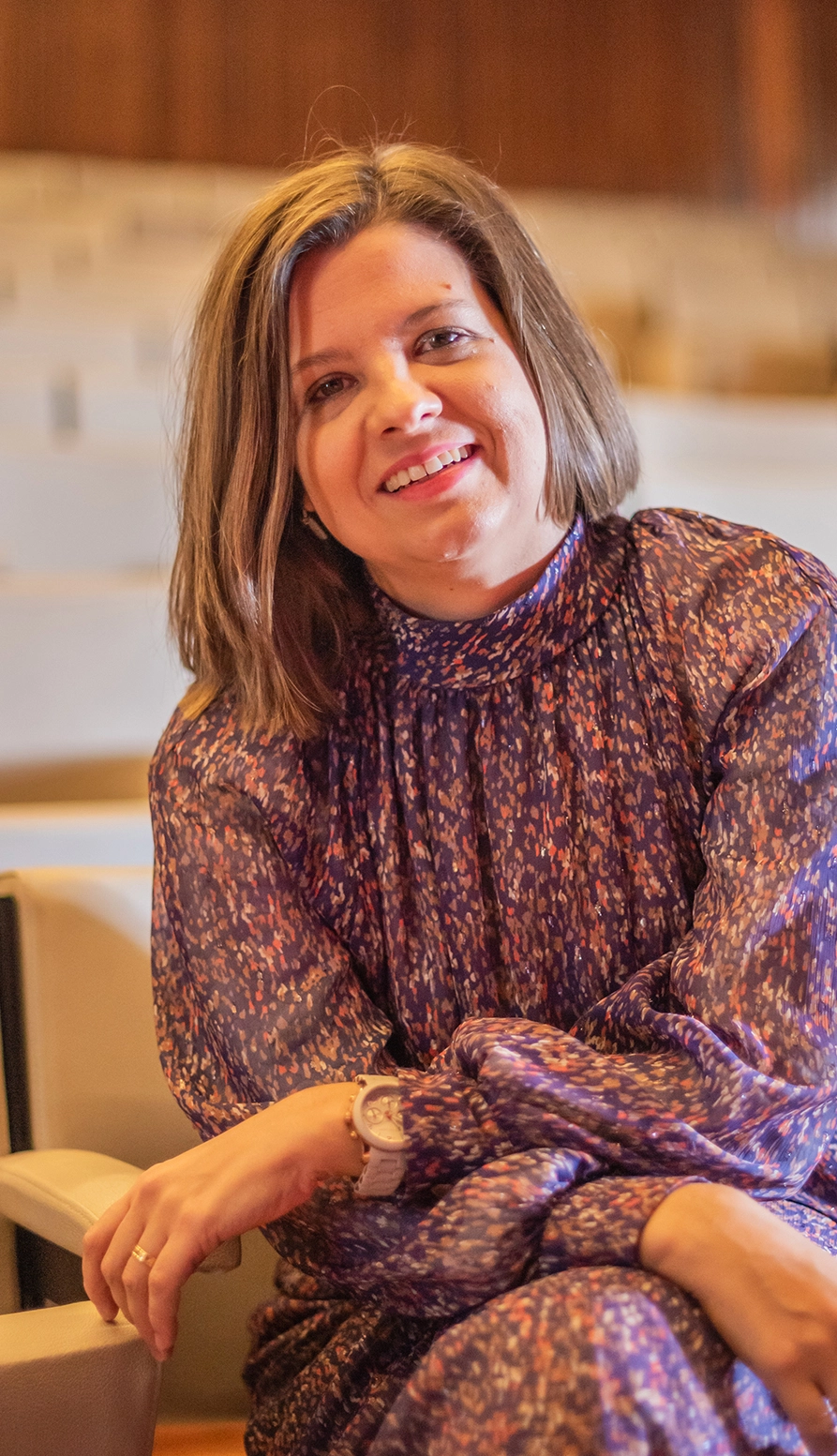
Sofia Sousa Rocha was born in 1986, in Braga, Portugal. She started studying piano at the age of seven, enrolling four years later at the Conservatório de Música Calouste Gulbenkian in Braga. Graduated in Composition by Escola Superior de Música de Lisboa (ESML), she studied with some of the most well recognized Portuguese composers. In 2012, Sofia concluded her Masters thesis in Composition at ESML under the guidance of Professor António Pinho Vargas.
Sofia’s music has been commissioned and/or performed by musicians, ensembles and orchestras such as the Gulbenkian Orchestra, Portuguese Symphony Orchestra, Algarve Orchestra, South Classical Orchestra, Lisboa Sinfonietta, Ricercare Choir, Sond’Ar-te Electric Ensemble and Trio, Contratempus Quartet, Síntese – Contemporary Music Group, among others.
She was commissioned by the Portuguese Opera House, Teatro Nacional de São Carlos to compose “Inês morre” (2011-12), a chamber opera with a libretto by Miguel Jesus, musical direction by João Paulo Santos, and stage direction by Luís Miguel Cintra. She was also Young Associated Composer at São Carlos (2017-18 season) under the guidance of Luís Tinoco, presenting a new piece for narrator and orchestra (2018). Sofia is co-creator of Festival Informal de Ópera, where she presented a chamber opera “Oráculos & Ladainhas”, with a libretto by Tiago Schäwbl and musical direction by Jan Wierzba (2021). She was commissioned by Quarteto Contratempus to write a new opera titled “Lugar Comum” (2022) with a libretto by Mário João Alves, stage direction by António Durães, and musical direction by Constança Simas. Sofia recently composed a new work for the 22nd National Wind Orchestra Residency “Templários” (2026), conducted by Alberto Roque.
She is teaching at the Conservatório de Música Calouste Gulbenkian of Braga since 2013.